
Introduction
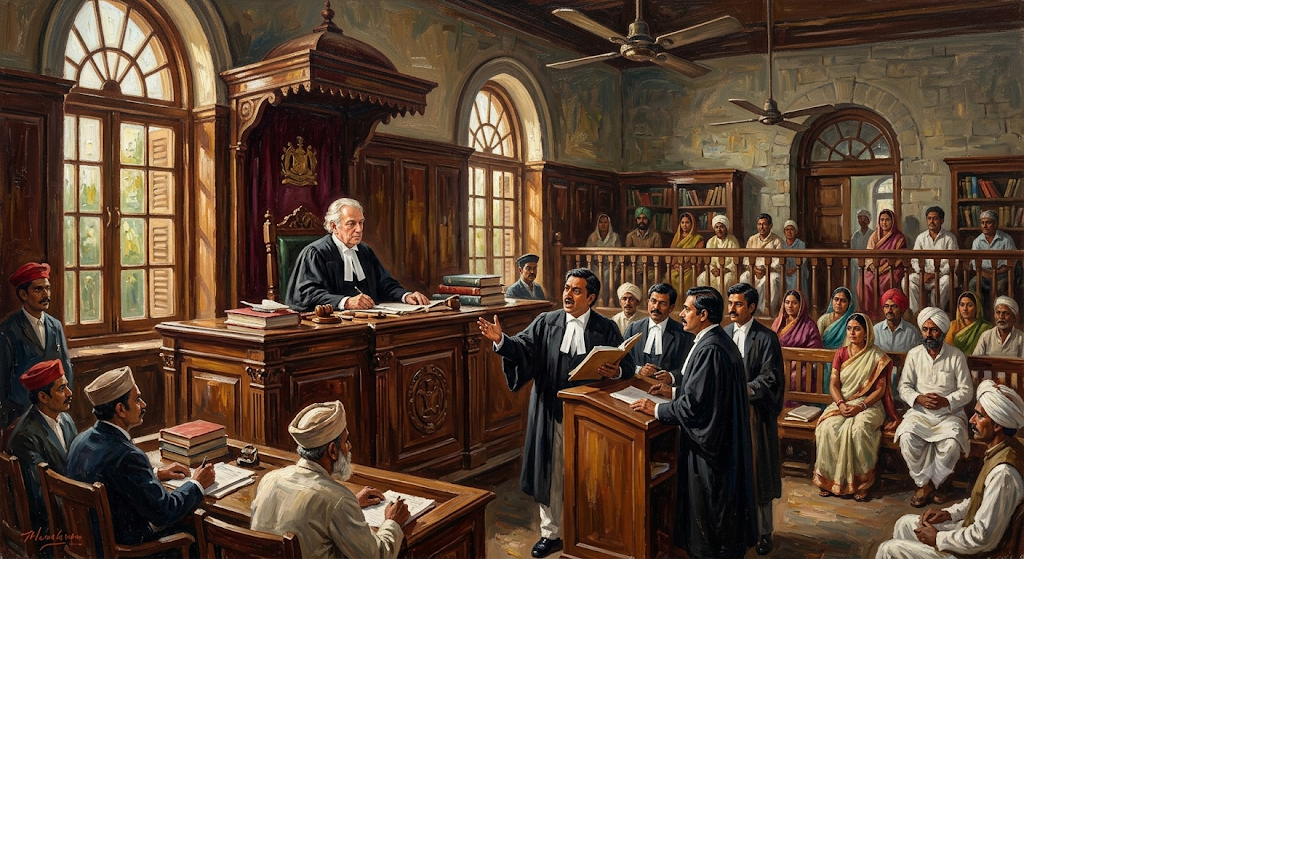
Filing a civil suit in India involves a series of procedural and substantive steps. A person seeking a legal remedy must first determine the nature of the dispute, identify the appropriate court, prepare the plaint and supporting documents, comply with applicable procedural requirements and then pursue the case through pleadings, issues, evidence, arguments and judgment.
The Code of Civil Procedure, 1908 (CPC) provides the principal procedural framework for ordinary civil suits. Under Order IV, a civil suit is commenced by presentation of a plaint. The CPC then provides separate procedures concerning summons, pleadings, trial and judgment.
This article explains the typical journey of a civil suit in India—from the decision to initiate proceedings to the final judgment and decree.
Important: The exact procedure may differ depending upon the nature of the dispute, the court, applicable State rules, special legislation and whether the matter is a commercial dispute or falls within another specialised jurisdiction.
1. Determine Whether a Civil Suit Is the Appropriate Remedy
The first step is to identify the nature of the legal dispute.
Civil suits may commonly involve:
- Recovery of money;
- Breach of contract;
- Property disputes;
- Possession of property;
- Injunctions;
- Specific performance;
- Declaration of rights;
- Partition;
- Damages;
- Commercial disputes;
- Disputes concerning movable or immovable property.
Before filing a suit, it is important to determine whether another remedy or forum is prescribed by law.
For example, certain disputes may fall within the jurisdiction of:
- Consumer Commissions;
- Commercial Courts;
- Family Courts;
- Tribunals;
- Arbitration;
- Revenue authorities;
- Other statutory forums.
Therefore, the first question should always be:
What is the legal right that has been violated, and what remedy is available for its enforcement?
2. Check Limitation
A suit must ordinarily be filed within the limitation period prescribed by the applicable law.
The limitation period depends upon the nature of the claim.
For example, the limitation applicable to a money-recovery claim may differ from that applicable to a claim concerning immovable property, declaration, specific performance or another cause of action.
Therefore, before preparing the plaint, determine:
- When did the cause of action arise?
- Has the cause of action continued?
- When did the limitation period begin?
- Is there any statutory provision extending or excluding time?
- Is there any acknowledgment or other legally relevant event?
- Is the proposed suit within limitation?
Limitation should be checked before filing, not after the suit has already been instituted.
3. Identify the Proper Court
A civil suit must be filed before a court having jurisdiction over the dispute.
Three important aspects of jurisdiction should be examined:
A. Territorial Jurisdiction
Determine the appropriate geographical jurisdiction.
Depending upon the nature of the dispute, jurisdiction may arise from factors such as:
- Location of the defendant;
- Location where the cause of action arose;
- Location of the property;
- Place where contractual obligations were performed or were required to be performed.
B. Pecuniary Jurisdiction
Determine which court has jurisdiction based upon the valuation of the suit.
The applicable pecuniary limits can depend upon the relevant court and State legislation/rules.
C. Subject-Matter Jurisdiction
Some disputes are assigned by law to particular courts or tribunals.
Therefore, the advocate should verify not only the value and location of the dispute but also whether a special statute provides a different forum.
4. Determine the Correct Parties
Identify all persons who are necessary or proper parties to the proceedings.
The plaint should correctly state:
- Name of the plaintiff;
- Father’s/mother’s or other identifying particulars where required;
- Address;
- Legal status where relevant;
- Name and address of each defendant;
- Relationship of each party to the dispute.
Incorrect identification of parties can create procedural difficulties later.
Before filing, verify names and addresses carefully from reliable documents.
5. Gather the Relevant Documents
The next step is to collect the documents supporting the plaintiff’s case.
Depending upon the nature of the dispute, these may include:
- Agreements;
- Contracts;
- Invoices;
- Receipts;
- Bank statements;
- Emails;
- Letters;
- Legal notices;
- Replies;
- Photographs;
- Property documents;
- Government records;
- Expert reports;
- Electronic records;
- Previous correspondence.
Create a document index.
A useful approach is:
| Document | Date | Purpose |
|---|---|---|
| Agreement | 01.01.2025 | Establish contractual relationship |
| Invoice | 15.02.2025 | Establish supply/transaction |
| 20.02.2025 | Establish communication | |
| Legal Notice | 01.03.2025 | Establish demand |
| Reply | 15.03.2025 | Establish defendant’s response |
6. Determine the Relief to Be Claimed
Before drafting the plaint, clearly identify what the plaintiff wants the Court to grant.
Possible reliefs may include:
- Recovery of money;
- Permanent injunction;
- Mandatory injunction;
- Declaration;
- Specific performance;
- Possession;
- Damages;
- Interest;
- Costs;
- Other consequential relief.
The relief should be legally maintainable and supported by the facts pleaded in the plaint.
7. Draft the Plaint
The plaint is the principal pleading by which the plaintiff institutes the civil suit.
Under Order IV of the CPC, a suit is commenced by presentation of a plaint.
The plaint generally contains:
1. Name of the Court
The appropriate court in which the suit is instituted.
2. Description of the Parties
Details of the plaintiff and defendants.
3. Facts of the Case
The material facts constituting the plaintiff’s case should be stated clearly and chronologically.
4. Cause of Action
The plaint should explain the facts giving rise to the plaintiff’s right to sue.
5. Jurisdiction
The plaint should explain why the particular court has jurisdiction.
6. Limitation
Where relevant, the plaint should address limitation and explain the basis for maintainability.
7. Valuation and Court Fee
The suit should be appropriately valued and the applicable court fee paid in accordance with the relevant law.
8. Relief/Prayer
The exact relief sought from the Court should be specified.
9. Verification
The pleading must be properly verified in accordance with the applicable procedural requirements.
8. Attach Supporting Documents
Documents relied upon by the plaintiff should be filed in accordance with the applicable procedural rules.
The exact filing requirements can vary depending upon the nature of the suit and the court.
Electronic records should also be dealt with in accordance with the applicable evidence law and procedural requirements.
The documents should be properly arranged and indexed so that the Court and opposing party can identify them easily.
9. Pay the Applicable Court Fee
The plaintiff must pay the applicable court fee.
The amount and method of calculation depend upon:
- Nature of the suit;
- Valuation;
- Relief claimed;
- Applicable State legislation.
Court-fee requirements should therefore be checked for the particular State and nature of proceedings before filing.
10. File the Suit
The plaint and accompanying documents are presented before the appropriate court through the prescribed filing mechanism.
Depending upon the court, filing may be:
- Physical;
- Electronic/e-filing;
- Through the court filing counter;
- Through another prescribed filing system.
After filing, the matter may undergo scrutiny by the registry.
The registry may identify procedural defects requiring correction.
11. Removal of Registry Objections
If defects or objections are raised by the Court Registry, they must be addressed within the prescribed procedure and time.
Common filing issues can include:
- Missing documents;
- Improper pagination;
- Incorrect indexing;
- Defective verification;
- Court-fee issues;
- Incomplete party details;
- Improper formatting;
- Missing affidavits;
- Other procedural defects.
After compliance with the filing requirements, the suit proceeds for consideration by the Court.
12. Preliminary Consideration by the Court
The Court examines whether the suit is properly instituted and whether it can proceed.
In appropriate cases, the defendant may challenge the maintainability of the suit.
For example, issues may arise concerning:
- Jurisdiction;
- Limitation;
- Cause of action;
- Court fee;
- Bar created by law;
- Improper valuation;
- Other statutory or procedural objections.
A plaint may, in appropriate circumstances, be rejected under Order VII Rule 11 CPC.
Therefore, proper drafting of the plaint is extremely important.
13. Issue of Summons to the Defendant
Once the suit has been duly instituted, summons may be issued to the defendant.
Order V of the CPC deals with the issue and service of summons. The summons is ordinarily accompanied by a copy of the plaint or the permitted statement.
The defendant is required to appear and respond to the claim in accordance with the applicable procedure.
14. Filing of Written Statement
The defendant ordinarily responds to the plaint through a Written Statement.
The Written Statement may contain:
- Preliminary objections;
- Para-wise response to the plaint;
- Admissions;
- Denials;
- Defendant’s version of facts;
- Legal objections;
- Set-off, where applicable;
- Counterclaim, where applicable;
- Prayer.
The defendant should specifically deal with the material allegations made in the plaint.
15. Replication, Where Necessary
Depending upon the nature of the case and directions of the Court, the plaintiff may file a replication to the Written Statement.
The replication generally:
- Responds to new facts raised by the defendant;
- Deals with preliminary objections;
- Clarifies the plaintiff’s position;
- Addresses the defendant’s defence.
A replication should not ordinarily be used to introduce an entirely new case contrary to the original plaint.
16. Admission and Denial of Documents
The parties may be required to state which documents they admit and which they dispute.
This process helps narrow down the controversy.
Admissions can significantly affect the scope of the trial because facts or documents that are properly admitted may not require the same level of proof as disputed matters.
17. Framing of Issues
Once the pleadings are complete, the Court identifies the material questions requiring determination.
These are known as issues.
Issues may concern:
- Questions of fact;
- Questions of law;
- Entitlement to relief;
- Liability;
- Limitation;
- Jurisdiction;
- Validity of a document;
- Breach of contract;
- Other disputed questions.
The issues effectively provide a roadmap for the trial.
18. Plaintiff’s Evidence
The plaintiff normally leads evidence to establish the case pleaded in the plaint.
This may include:
- Examination-in-chief;
- Documentary evidence;
- Witness testimony;
- Expert evidence, where required;
- Electronic evidence, where applicable.
The plaintiff’s witnesses may be subjected to cross-examination by the defendant.
19. Defendant’s Evidence
After completion of the plaintiff’s evidence, the defendant ordinarily gets an opportunity to lead its evidence.
The defendant may produce:
- Its own witnesses;
- Documentary evidence;
- Expert evidence;
- Other admissible evidence.
The plaintiff is ordinarily entitled to cross-examine the defendant’s witnesses.
20. Final Arguments
After evidence is completed, the parties present their final arguments.
A good final argument generally follows this sequence:
Step 1 — Facts
Briefly establish the factual background.
Step 2 — Issues
Address each issue separately.
Step 3 — Evidence
Point the Court to the relevant testimony and documents.
Step 4 — Law
Refer to the applicable statutory provisions and precedents.
Step 5 — Application
Explain how the law applies to the evidence on record.
Step 6 — Relief
Clearly state the relief sought.
21. Judgment
After hearing the parties and considering the material on record, the Court delivers its judgment.
The judgment determines the issues arising in the case and records the Court’s conclusions.
Depending upon the case, the Court may:
- Decree the suit;
- Dismiss the suit;
- Partly allow the suit;
- Grant some of the reliefs claimed;
- Grant other legally permissible relief;
- Pass appropriate orders concerning costs and interest.
22. Decree
Where applicable, the judgment is followed by a formal decree.
The decree is important because it formally expresses the adjudication of the rights of the parties.
For example, in a money-recovery suit, the decree may specify:
- Amount payable;
- Interest;
- Costs;
- Liability of the parties.
23. What Happens After Judgment?
The litigation may not necessarily end with the judgment.
The aggrieved party may, depending upon the applicable law, consider:
- Appeal;
- Review;
- Revision, where maintainable;
- Other statutory remedies.
If the successful party obtains a decree but the judgment-debtor does not comply voluntarily, execution proceedings may be required.
Execution is the process through which the decree-holder seeks enforcement of the decree.
Civil Suit: Complete Journey at a Glance
Dispute arises
↓
Check limitation
↓
Identify appropriate remedy
↓
Determine jurisdiction
↓
Identify parties
↓
Collect documents
↓
Determine relief
↓
Draft plaint
↓
Pay applicable court fee
↓
File plaint
↓
Registry scrutiny
↓
Removal of defects
↓
Court considers the suit
↓
Summons to defendant
↓
Written Statement
↓
Replication, where applicable
↓
Admission & Denial
↓
Framing of Issues
↓
Plaintiff’s Evidence
↓
Cross-Examination
↓
Defendant’s Evidence
↓
Cross-Examination
↓
Final Arguments
↓
Judgment
↓
Decree
↓
Appeal / Other Remedy, where applicable
↓
Execution of Decree, where necessary
Special Note on Commercial Suits
A commercial dispute may be governed by additional procedural requirements.
The Commercial Courts Act, 2015 provides a separate framework for specified commercial disputes and includes provisions concerning jurisdiction, specified value, pre-institution mediation and amendments to the CPC applicable to commercial disputes.
In particular, Section 12A provides for pre-institution mediation and settlement for a suit that does not contemplate urgent interim relief, subject to the statutory requirements.
Therefore, before filing a commercial suit, an advocate should specifically examine:
- Whether the dispute qualifies as a commercial dispute;
- Whether the specified-value requirement is satisfied;
- The appropriate Commercial Court/Commercial Division;
- Whether pre-institution mediation is required;
- The applicable Commercial Courts Act and procedural rules;
- The special CPC provisions applicable to commercial disputes.
Common Mistakes to Avoid While Filing a Civil Suit
1. Filing in the Wrong Court
Always verify territorial, pecuniary and subject-matter jurisdiction.
2. Ignoring Limitation
A potentially meritorious claim can face serious difficulty if instituted after limitation has expired.
3. Vague Pleadings
Material facts should be pleaded clearly and systematically.
4. Claiming Unsupported Relief
Every relief should have a factual and legal foundation.
5. Not Filing Important Documents
Important documentary evidence should be identified and dealt with properly from the beginning.
6. Introducing a New Case During Evidence
Evidence should generally remain within the framework of the pleadings.
7. Ignoring Admissions
Admissions in pleadings, correspondence and evidence can materially affect the case.
8. Failing to Read Previous Orders
Every hearing should be prepared with reference to the latest order and pending directions.
Practical Checklist Before Filing a Civil Suit
Preliminary
☐ Identify the legal dispute
☐ Determine the appropriate remedy
☐ Check limitation
☐ Check jurisdiction
☐ Identify all parties
Documents
☐ Agreements/contracts
☐ Invoices/receipts
☐ Correspondence
☐ Notices/replies
☐ Bank records
☐ Property documents, where applicable
☐ Electronic records
☐ Other supporting evidence
Plaint
☐ Cause of action
☐ Jurisdiction
☐ Limitation
☐ Valuation
☐ Court fee
☐ Relief/prayer
☐ Verification
☐ Supporting documents
After Filing
☐ Registry scrutiny
☐ Removal of objections
☐ Summons
☐ Written Statement
☐ Replication, where applicable
☐ Admission/denial
☐ Issues
☐ Evidence
☐ Final arguments
☐ Judgment and decree
☐ Appeal/execution, where applicable
Conclusion
Filing a civil suit is not merely the act of submitting a plaint to a Court. It is the beginning of a structured legal process that can involve pleadings, documents, procedural applications, framing of issues, evidence, cross-examination, arguments, judgment and, where necessary, execution or appellate proceedings.
The strongest civil cases are generally built from the beginning by carefully identifying the cause of action, selecting the correct forum, drafting precise pleadings, preserving relevant evidence and presenting the case issue-by-issue.
For advocates and law students, understanding the complete journey of a civil suit—from plaint to judgment and decree—is essential to understanding civil litigation in practice.
Indian Legal Info aims to provide practical legal information, litigation guides, judgments, legal research resources and drafting material for advocates, litigants and law students.